Super trip to winter Chukotka
Tour dates: March 5-15, 2027
For today, November 09, 2026, 6 places from 8 are available on this tour.
You've been eagerly awaiting and asking us to plan a trip to Chukotka, and despite all the challenges associated with nature, logistics, and the almost complete lack of tourist services in the region, we took the risk and made it happen! And all because we truly and wholeheartedly love this harsh northern region and dream of visiting again and again. This time, we've taken our love for northern exoticism even further and offer you a winter trip to Chukotka! You'll likely find nothing like this anywhere else! The program includes Russia's easternmost city, Anadyr, the capital of Chukotka, Russia's easternmost highway, much of which is accessible only in winter, the stunning natural beauty of Kresta Bay, a unique ethnopark, the abandoned ghost town of Iultin, two of the region's best museums, and much more. Embark on an adventure with us!
Trip Organizer:
VIKTORIA SHATALOVA
Professional traveler, author's trip organizer with 17 years of experience. She has visited 40 countries around the world and 83 regions of Russia. Organizer and participant of numerous hikes, rafting trips, car trips, ascents, including the ascent of the highest and most dangerous volcano in Eurasia - Klyuchevskaya Sopka (4850 m), ski trips in the northern and subpolar Urals, the Murmansk region and the Kuznetsk Alatau.... Read more
Itinerary day by day:
Arrival at Anadyr Airport. Accommodation in a rented apartment in the village of Ugolnye Kopi. First glimpse of Chukotka and a stroll through the surrounding area.
More
Flight to the village of Egvekinot. The village is the center of the Iultinsky District of the Chukotka Autonomous Okrug. It is located on Kresta Bay, one of the most picturesque places in Chukotka.
Kresta Bay is part of the Gulf of Anadyr in the Bering Sea, off the southern coast of the Chukotka Peninsula. The bay was discovered in 1648 during Semyon Dezhnev's expedition. Its current name was given by Vitus Bering in 1728 in honor of the feast of the Holy Cross. The bay's steep shores are heavily indented by coves and river estuaries. In winter, the bay is covered in ice, and the surrounding snow-capped hills are especially captivating, allowing you to fully immerse yourself in the atmosphere of the far north.
Upon arrival, we'll check into a hotel or apartment and take a walk to admire the amazing places we've found ourselves in.
We'll take a tour of the Egvekinot Municipal District Museum of Local History. Housed in a separate two-story building, this museum is rightfully considered one of the best museums in Chukotka. The museum's extensive collection allows you to explore the region from every angle: the ethnographic collection provides insight into the life and customs of people in Chukotka since prehistoric times, while the mineralogical collection introduces you to the riches of this harsh region. The history of the Soviet period is represented by materials related to the history of aircraft ferrying along the Alaska-Siberia route during the Great Patriotic War, the history of the Gulag, the geological development of Chukotka, and the development of construction in this remote northern region.
After visiting the museum, we'll head to the Nunalikhtak (Master of the Land) Ethnopark, located on Cape Opasny, approximately 5 km from the village of Egvekinot. The ethnopark was originally conceived as a filming location for a historical adventure film about the life of the Eskimos in Chukotka and their encounter with Russian explorers. The film was never made, but it became an interesting tourist attraction. The park consists of two parts—historical and modern. The historical part of the park depicts a settlement of Chukotka sea hunters. The complex consists of Eskimo dwellings, and along the slope are hangars made from whalebones for storing authentic Chukchi leather canoes. The modern complex includes a visitor center, a recreation area, a walking trail, and an observation deck offering panoramic views of Kresta Bay and the surrounding hills. The park was created almost entirely by hand, using traditional methods, without the use of specialized machinery or modern equipment, and according to scientists from the Institute of Ethnology and Anthropology of the Russian Academy of Sciences, is unique in the world.
We're setting off on a journey along the easternmost highway in our country, the Mys Shmidta-Iultin-Egvekinot road. It connects the coasts of the Arctic and Pacific Oceans, crossing the Chukchi Plateau almost exactly from south to north. The road was built between 1946 and 1951 by prisoners of the Chukotlag prison camp to service the tungsten and tin deposits that were mined in the village of Iultin until the 1990s. Currently, only the section of the road to the village of Amguema is operational year-round; the rest is a winter road. We plan to reach the village of Iultin, a veritable ghost town, abandoned by its residents after metal ore mining ceased there in the 1990s.
A trip along the Iultinskaya Highway will give you the opportunity to experience the unique nature of the Chukotka Peninsula, as it crosses the tundra and the Chukchi Highlands, with their passes and mountain peaks. The road crosses the Arctic Circle, leading to a stele at the 24th kilometer, which is the easternmost stele of the Arctic Circle in Russia.
Today we will travel approximately 90 kilometers along the Iultinskaya Highway and stop in the village of Amguema. This traditional Chukchi village is the farthest from the district center in Chukotka with year-round land transport. Many who have visited here remark that they were lucky enough to see the beautiful aurora borealis, and we hope we will be too. There are no hotels in the village; accommodation is provided in apartments owned by local residents.
We continue our journey along the Iultinskaya Highway. We'll cross one of its most challenging sections, the Iultinsky Pass, approximately 900 meters above sea level, and arrive in the abandoned village of Iultin. Founded in 1953 and thriving thanks to metal ore mining and the operation of a mining and processing plant, the village was abandoned after the collapse of the USSR. Today, Iultin is a frozen world of the Soviet era: entire streets lined with five-story buildings, a school, a kindergarten with a swimming pool, a hospital, and shops. The geological survey buildings and the remains of the processing plant also remain. The panorama of the village against the backdrop of the snow-covered mining and processing plant dumps, visible from the highway, is quite picturesque. It's hard to believe that in this once thriving village of approximately 6,000 people, only one residential building remains—the road service station, which maintains the road in winter. Having explored the ghost town of Iultin, we set off on our return journey. Depending on the weather and road conditions, we will reach the village of Amguema or Egvekinot.
A spare day. Weather conditions in Chukotka are unstable, with blizzards and snowdrifts possible, which could slow or even impede travel. This day is essential in case of delays.
Flight to Anadyr Airport, from where we'll cross the ice of the Anadyr Estuary to the capital of Chukotka. Upon arrival, we'll check into a hotel or apartment, take a stroll around the city, and explore the sights of Russia's easternmost city.
Today we'll visit the Chukotka Heritage Museum Center, where we'll see exhibits dedicated to the region's history and culture. The museum includes sections devoted to ethnography, history, arts and crafts, and archeology, as well as paintings and sculptures. The Museum Center's most distinctive collection is rightfully considered to be its collection of bone carvings, often called "Chukotka's calling card." It features works by the region's most renowned artisans.
We'll reserve part of the day for shopping for local souvenirs. In addition to arts and crafts, you can also purchase fish and meat delicacies, as well as clothing from the Chukotka brand.
We suggest spending the evening in a restaurant serving local cuisine.
Reserve days in case of flight delays. Local flight delays due to weather conditions in Chukotka are the rule rather than the exception, so it's essential to reserve a few days.
Transfer to the airport and flight home. Farewell, Chukotka – a wild, cold, but beautiful land!
Organizational fee:
3250 Euro (until December 31, 2026)
3650 Euro (from 01.01.2027)
The organizational fee includes:
- All transfers and drop-offs in Chukotka within the program and travel dates,
- Accommodation in rented apartments or hotels throughout the trip,
- A trip organizer who accompanies the group throughout the trip and resolves any issues that arise,
- personalized gifts and a certificate for each participant
The organizational fee is NOT included.:
- Round-trip air tickets to Anadyr (purchased by participants after purchasing domestic flight tickets),
- Air tickets Anadyr - Zaliv Kresta - Anadyr (purchased by the organizer centrally for the entire group, paid for separately before December 1),
- Meals,
- medical insurance,
- clothing and personal equipment of participants,
- expenses of participants related to force majeure circumstances, including flight delays due to with domestic flight delays, weather conditions, vehicle breakdowns, etc.;
- souvenirs and other personal expenses of participants,
- other expenses not specified in the "included in the price" section
The trip is not physically demanding and does not require any specific skills or fitness. However, please understand that we are traveling to a harsh region during the winter. Please be prepared for low temperatures (usually around -20°C at this time of year, but temperatures down to -40°C and even lower are possible) and wear appropriate clothing, keeping in mind that sightseeing often involves spending time outdoors and short walks. The route involves long journeys by transport on poor roads, and delays and route changes are possible due to weather conditions (blizzards, snowdrifts, avalanches) or vehicle breakdowns.
Flight delays are possible due to weather conditions, including delays of several days (we have provided a large reserve of extra days, but we still cannot 100% guarantee that these will be enough to complete the program in full and/or ensure a timely flight home). Not all the locations listed in the program have hotels. We guarantee a roof over your head, but not the comfort you're accustomed to. You may be accommodated in private homes or administrative buildings, with several people per room, including sleeping bags on the floor.
If you're accustomed to comfort and everything going according to plan, this trip is definitely not for you!
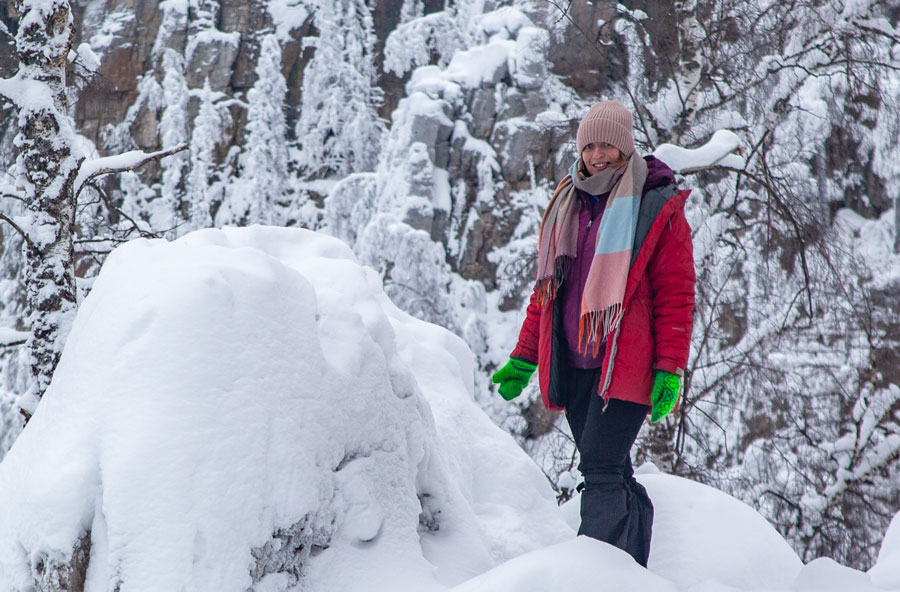
We're heading to the harsh northern region during the cold season, so it's important to choose your clothing carefully.
We recommend a ski jacket and insulated ski pants, warm winter thermal underwear, a fleece or wool jacket or sweater (a couple of warm jackets are a plus), warm gloves and insulated windproof mittens, a hat, scarf, and a balaclava (in case of strong winds). A warm down jacket and/or down vest, worn over or under your ski jacket, would also be a good idea.
Please note that regular street shoes are not suitable for this trip.
We recommend one of the following options:
- insulated EVA boots (like those for snowmobiling or winter fishing),
- felt boots or insulated down boots that allow you to wear several pairs of warm wool socks,
- winter trekking boots + several pairs of warm socks + insulated shoe covers.
Please note that in all cases, several pairs of warm wool socks are required! Your shoe size should be large enough to fit them!
Since some of the villages where we will be spending the night have no hotels and there may be a shortage of sleeping places, you will need to bring a sleeping mat (inflatable or foam) and a sleeping bag. A sleeping bag is suitable for any temperature, even a summer one, since we'll be sleeping indoors. However, we may have to sleep on the floor due to a shortage of sleeping spaces.
It's best to pack your luggage in a backpack or duffel bag, as moving a wheeled suitcase in the snowy Chukotka hinterland can be difficult and extremely inconvenient.
If you're new to winter travel in the north, or if you have any questions or concerns about choosing clothing and equipment for this trip, please contact us; we'll help you make the right choice!
IMPORTANT! Foreign citizens are required to obtain a special permit to enter the border zone, which takes at least two months to process! There is also a risk of being denied entry into the Chukotka Autonomous Okrug without explanation. If you are not a Russian citizen, please apply as soon as possible!
1. If you are interested in this trip, leave a request using the form below or write to messengers, we will contact you and answer all your questions.
2. To reserve a place, you must make a prepayment of 30% of the registration fee. Prepayment is refundable 45 days or more before the start of the trip and, unfortunately, non-refundable less than 45 days before the start if the refund is due to your refusal to participate (for any reason). If the trip does not take place due to our fault, due to the group not being formed or due to force majeure, the prepayment will be guaranteed to be returned to you in any case.
3. Tickets for the domestic flight Anadyr - Bay of the Cross - Anadyr are purchased centrally by the travel organizer for the entire group. The money for them (35,000 rubles as of 2026) is paid separately by the participants and the organizer until December 1, 2026. The start of ticket sales is in December or January - the date will be known 1-2 weeks in advance, tickets can only be purchased on the first day of sales, then it will be impossible to buy these tickets!
4. Tickets to Anadyr and back are purchased by participants themselves! There are direct flights from Moscow (three times a week) by Aeroflot/Russia (cost for 2026 - 40 thousand rubles round trip), as well as flights with transfers in Novosibirsk, Vladivostok, Khabarovsk, Petropavlovsk-Kamchatsky. But tickets to Anadyr must be purchased only after we have confirmed the purchase of tickets for a domestic flight!
5. Final payment is made seven to three working days before the start of the trip.
© The program description uses photographs by Evgeny Androsov and Victoria Shatalova.